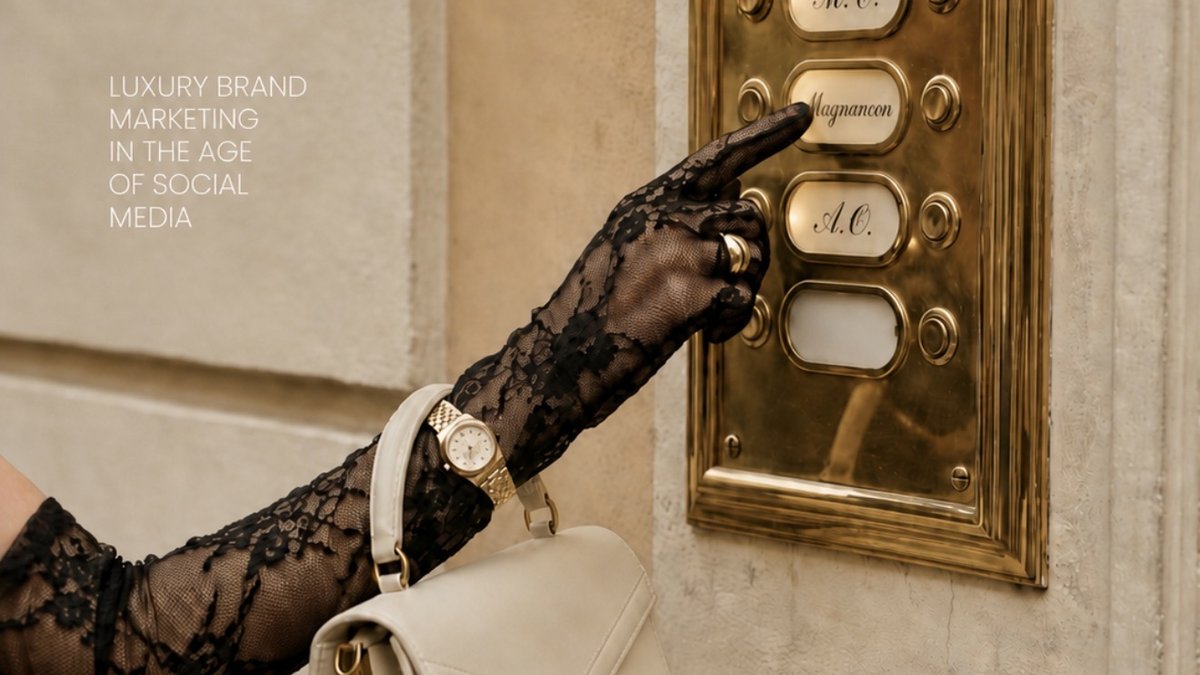
When people think of luxury, they often think of brands like Chanel, Louis Vuitton, Gucci, Dior or Hermès. Brands with instantly recognisable identities, elevated visuals, exceptional craftsmanship, carefully curated retail experiences and price points that place them firmly outside the everyday.
Today, luxury brands are discovered, judged and remembered through social media.
Before a customer visits a store, books a consultation or makes a purchase, they have likely already formed an opinion from a brand’s Instagram feed, TikTok presence, campaign imagery, influencer partnerships, website and digital storytelling.
For luxury brands, social media is not just a visibility tool. It is a brand-building tool.
It shapes perception, creates desire, builds trust and communicates value long before a customer is ready to buy.
Luxury Marketing Is Not Just About Exclusivity
For a long time, luxury marketing has been associated with rarity, status and exclusivity.
While these still matter, modern luxury brands cannot rely on exclusivity alone. A luxury brand still needs to be seen, remembered and understood by the right audience.
This is where social media plays a crucial role.
The challenge for luxury brands is not simply to be visible. It is to be visible in a way that feels elevated, intentional and aligned with the brand’s positioning.
A luxury brand’s content should not feel rushed, inconsistent or overly sales-led. Every post, caption, campaign and visual detail should contribute to the world the brand is building.
Luxury marketing is about creating a feeling.
Social media is where that feeling is experienced repeatedly.
Social Media Builds Brand Memory
Strong luxury brands are memorable.
They have distinctive colours, visual codes, tone of voice, campaign styles, product details and brand associations that make them instantly recognisable.
On social media, these brand memories are built through consistency.
This includes:
- The way a brand edits its imagery
- The language used in captions
- The type of content it shares
- The people it collaborates with
- The environments it appears in
- The emotions its content creates
- The level of polish across every touchpoint
Luxury buyers may not purchase immediately after seeing one post. But over time, consistent brand storytelling helps the audience understand who the brand is, what it represents and why it is worth paying attention to.
For luxury brands, the goal of social media is not only to generate quick engagement. The goal is to build long-term desire.
Luxury Brands Need Reach, Not Just Loyalty
Luxury brands often focus heavily on loyalty, assuming that growth comes mainly from repeat buyers and highly devoted customers.
Loyalty is valuable, but luxury brands also need reach.
A luxury brand cannot grow if only a small audience knows it exists. Social media allows luxury brands to reach aspirational customers, future buyers, brand advocates and high-intent audiences at scale.
Not everyone who follows a luxury brand will buy immediately. Some may engage for inspiration. Some may save posts. Some may follow for years before purchasing. Some may never buy but still contribute to cultural relevance, desirability and word of mouth.
This matters.
In luxury marketing, visibility creates familiarity. Familiarity creates trust. Trust supports desire. Desire influences purchase.
The most effective luxury brands understand how to balance aspiration with accessibility. Their content feels exclusive in quality, but still visible enough to remain culturally relevant.
The Role of Social Media in Luxury Brand Positioning
Social media gives luxury brands the opportunity to communicate positioning every single day.
A brand does not need to repeatedly say “we are premium” or “we are luxury.” The content should communicate that through execution.
For luxury brands, social media should feel less like constant promotion and more like a curated brand world.
The best luxury content does not simply sell a product. It sells taste, identity, lifestyle, aspiration and belonging.
Luxury Content Should Create Desire Before It Creates Demand
Luxury purchases are often emotional.
Customers are not only buying the product or service. They are buying the meaning attached to it.
This is why luxury social media content should focus on desire before direct selling.
Instead of posting only product features, luxury brands should create content that answers deeper questions:
- What does this brand represent?
- What kind of lifestyle does it belong to?
- Why does it feel desirable?
- What makes the experience elevated?
- What emotions should the audience associate with it?
- Why is this brand worth remembering?
This can be achieved through editorial imagery, storytelling-led captions, campaign concepts, founder narratives, craftsmanship content, client transformations, cultural references and aspirational visuals.
Luxury content should make the audience want to be part of the brand world.
Social Media Is the Modern Luxury Storefront
A luxury brand’s social media presence is often the first point of contact with a potential customer.
That means the feed, highlights, reels, captions and overall visual identity need to work together as a digital storefront.
For a luxury brand, an inconsistent or poorly executed social media presence can weaken perception, even if the product or service itself is high quality.
A strong social media presence should make the audience feel confident in the brand before they enquire, purchase or book.
Luxury customers expect quality at every stage. Social media is no exception.
Luxury brands may feel different from everyday brands, but many of the same marketing principles still apply.
Luxury brands still need to be remembered.
They still need to reach new buyers.
They still need to build trust.
They still need to create consistent brand associations.
They still need to make it easy for the right people to understand, desire and buy from them.
The difference is in the execution.
Luxury marketing requires more intention, stronger creative direction and a deeper understanding of perception.
A luxury social media strategy should not be built on posting for the sake of posting. It should be built around brand-building, storytelling, visibility and desire.